- Stop Hogging Water, San Francisco!
- Die-off at Berkeley’s Aquatic Park
- Investigating Toxic Sites During High Tides
- Oil Refineries Dump Massive Pollution into the Bay
- Music Video Production Begins for Small but Mighty
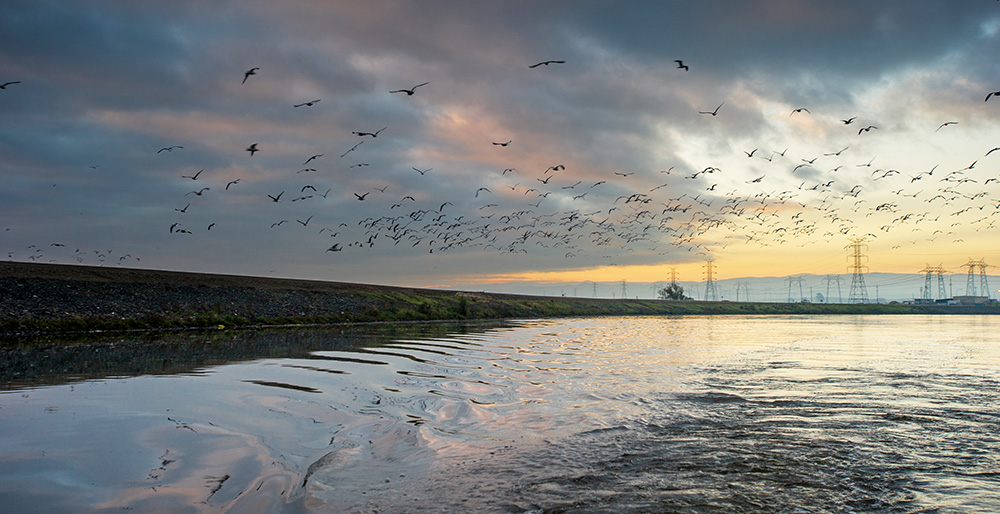
Stop Hogging Water, San Francisco!
Wastewater recycling is a win-win for people and the environment. It can remove the pollution that causes algae blooms, and reduce urban demand for fresh river water and drought-proof our water supply when California goes through dry spells. Every gallon of wastewater that’s recycled can increase the fresh water that remains in our rivers to protect fish, wildlife, and water quality.
Unfortunately, San Francisco currently recycles less than 1% of its wastewater—far behind Los Angeles and other parts of Southern California. San Francisco is also a water hog when it comes to taking water from the overburdened Tuolumne River. The city is even suing the state to stop it from restoring the river flows that would improve the health of the Bay and Delta.
That’s why Baykeeper worked with San Francisco Supervisor Aaron Peskin to draft a resolution urging the San Francisco Public Utilities Commission to invest in water recycling. Along with key partners this week, we testified before the Board in support of the resolution, which passed unanimously. We’ll continue to keep the pressure on city officials to implement water recycling, reduce its reliance on our rivers, and limit the wastewater pollution San Francisco adds to our Bay.
Photo above of the Delta by John Chacon, DWR
Die-off at Berkeley’s Aquatic Park
Over the past week, we’ve received multiple reports to our hotline about dead sharks and bat rays washing up at Aquatic Park in Berkeley. Our field team is working with our partners at Friends of Five Creeks and the City of Berkeley to investigate.
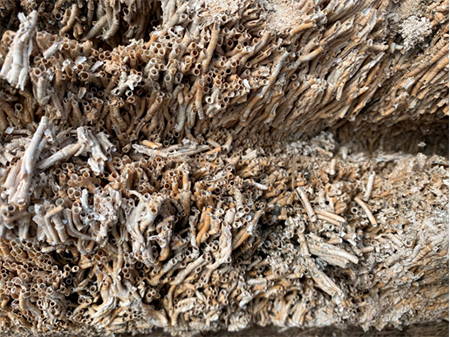
Sadly, this location has a history of die-offs. In the past, dead fish have washed ashore after tidal gates became clogged with tubeworms (pictured, below). The worms blocked the inflow of Bay water, which may have caused salinity and oxygen levels to plummet in the confined lagoon, or pollutant and pathogen levels to rise. We’re urging the city to do more to maintain the tidal gates so that healthier water flows can prevent the needless loss of Bay wildlife.
If you observe unusual numbers of dead fish or other Bay creatures in this area, or any other spot around the Bay, please submit a report to our pollution hotline.
Investigating Toxic Sites During High Tides
Last month, Baykeeper’s field team took our patrol drone for a spin during the King Tides, which are the highest tides of the year.
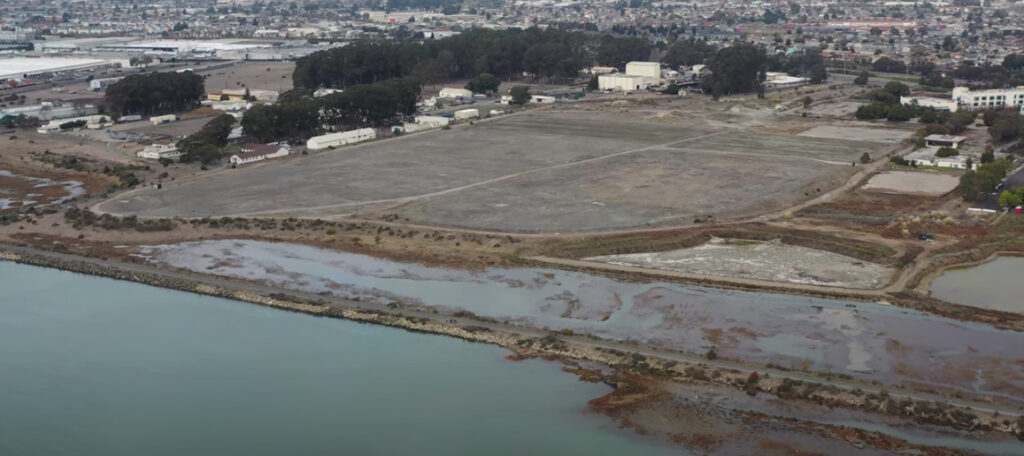
The team was investigating how the high tides interact with toxic sites lying at sea level along the Bay. These sites of concern are mostly former industrial hotspots, where the pollution was not adequately contained or cleaned up. One site in Richmond, for example, contained high levels of toxic chemical pollutants from the days when the Stauffer chemical and Astra Zeneca pharmaceutical manufacturing plants were based there.
We’re using the footage from these King Tides’ investigations to assess which sites are most vulnerable to sea level rise. And we’re advocating for government agencies to clean up toxic hotspots before hazardous waste gets washed into the Bay. Click here to urge our regulators to take action to prevent toxic site flooding around the Bay!
Pictured, below: Baykeeper drone footage of the Astra Zeneca toxic site in Richmond
Oil Refineries Dump Massive Pollution into the Bay
The Bay Area is home to five polluting oil refineries, and Baykeeper has been fighting them for more than 30 years. That’s why the Environmental Integrity Project recently invited us to partner on a new report.
The analysis summarizes how refineries around the Bay—including Chevron in Richmond, and Valero in Benicia—have dumped huge volumes of selenium, nitrogen, oil and grease, arsenic, lead, cyanide, and many other toxic substances into the Bay’s waters. All of these pollutants have adverse effects on wildlife and water quality, and on neighboring communities.
Baykeeper executive director Sejal Choksi-Chugh told the San Francisco Chronicle that both federal and state regulators are too lenient. In addition, she observed: “EPA and Regional Water Board’s refusal to regulate selenium and other refinery pollution is a disgrace. It’s offensive to the people who live and depend on a healthy Bay, and certainly doesn’t meet the government’s obligations to protect us all from toxic industry pollution.”
Pictured, below: a spill of petcoke from the Valero oil refinery in Benicia
Music Video Production Begins for Small but Mighty
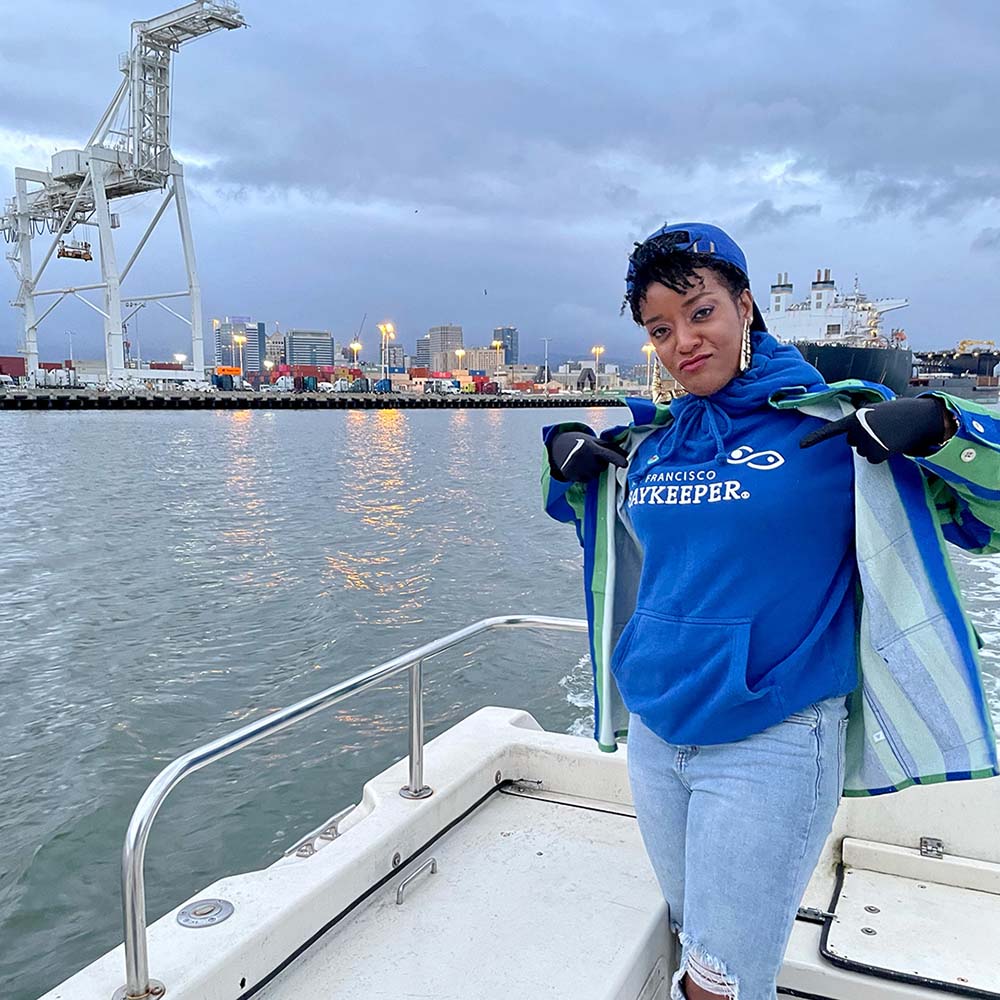
This month, the Baykeeper boat took on a totally new role—as a music video set, featuring GRAMMY-nominated hip hop artist RyanNicole (pictured, below)!
The music video is for Small but Mighty, a song about polluters and government corruption, and how every person needs to take action to make our Bay safer. There’s even a shout out to Baykeeper’s boat and pollution hotline!
The song and video, funded with a grant from the Creative Work Fund, will help bring new audiences to Baykeeper’s work and encourage everyone living around the Bay to get active against pollution in our communities.
Stay tuned for the video’s official debut later this spring!