Sick of Sewage
The rainy season brings a big problem for San Francisco Bay: sewage spills.
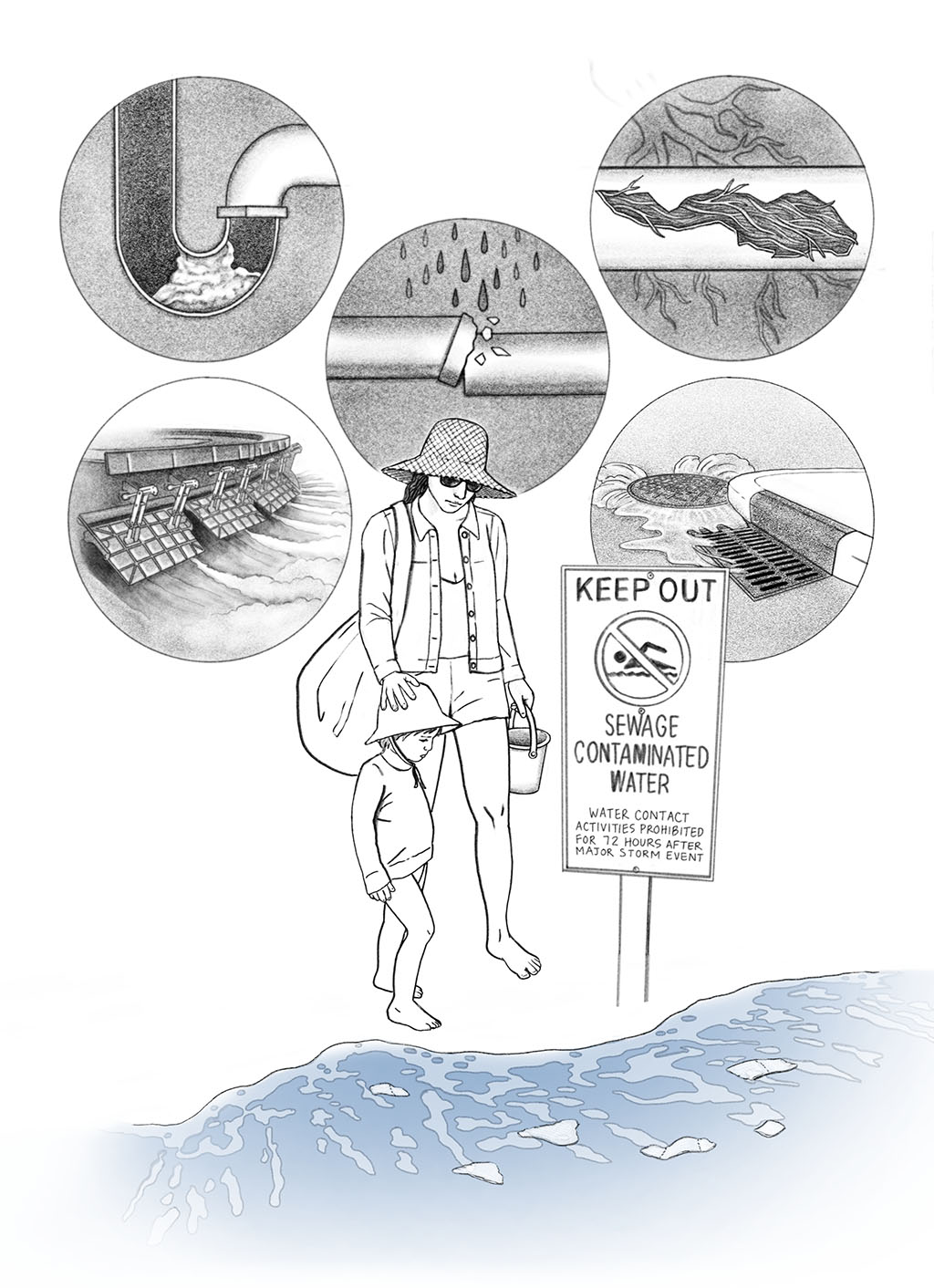
Aging sewer pipes around the Bay Area are crumbling, and many cities have been ignoring the problem for decades. Large volumes of rain seep into these pipes, causing overflows that spill into streets, and the sewage then gets washed into the Bay.
When raw sewage spills into our streets and creeks, it exposes people to bacterial infections and illnesses. Untreated sewage also hosts a brew of contaminants that can kill fish in urban creeks, lower dissolved oxygen in the Bay, and prevent people from enjoying local waterways.
When raw sewage spills into our streets and creeks, it exposes people to bacterial infections and illnesses.
Featured Update
SF Is Making U.S. Waters Unsafe Again
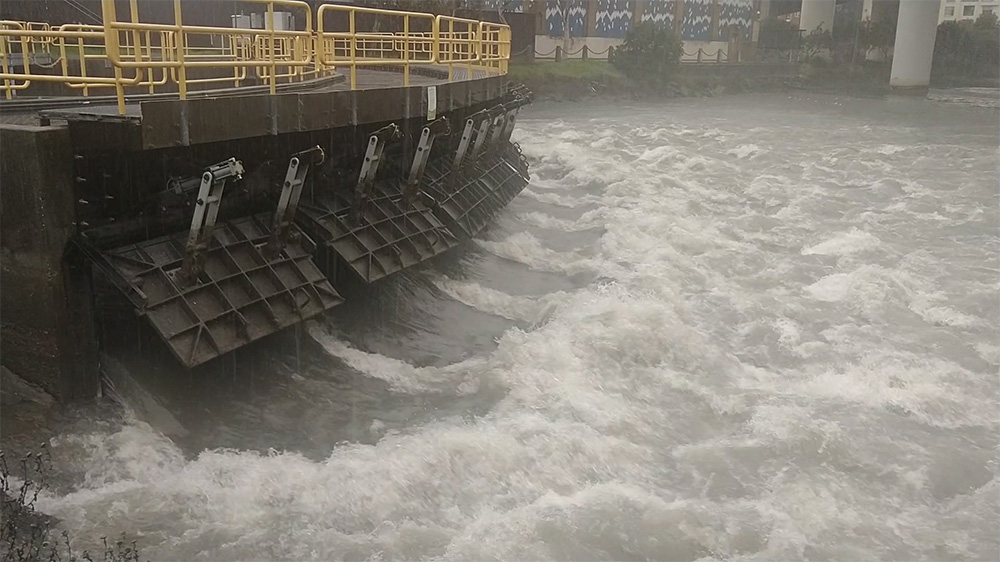
The city with the greenest reputation in the country just helped the U.S. Supreme Court undermine the Clean Water Act—and that’s not the only way the city’s water utility, SFPUC, is wreaking havoc on the environment.
SFPUC dumps nearly two billion gallons of raw sewage and urban runoff into the Bay each year. The agency also lobbies to send massive amounts of the Bay’s fresh water to industrial agricultural operations, jeopardizing the Bay’s salmon population and other endangered fish.
Learn More and Take ActionReducing spills
Since 1996, Baykeeper has identified some of the worst sewage polluters and taken legal action.
And, it’s made a difference. Baykeeper’s legally-binding agreements have required many Bay Area sewer agencies—which serve more than 20 cities around the Bay—to upgrade their dilapidated infrastructure. Under our agreements, sewer agencies are required to make repairs and improvements on a yearly timetable.
As a result, Bay Area sewer agencies have dramatically reduced their spills of raw sewage into San Francisco Bay. Some Bay Area sewer agencies are making progress that will keep sewage pollution out of the Bay in the future. And other agencies still need to do more to protect the Bay under their legal agreements with Baykeeper.
Agencies serving the cities of Hillsborough, Millbrae, San Bruno, and the West Bay Sanitary District, which covers Atherton, East Palo Alto, Menlo Park and other communities on the southern peninsula, have all made the required repairs and decreased Bay pollution. Richmond’s sewer agency is also making progress at reducing sewage spills.
Baykeeper will continue our legal action, and continue to monitor and enforce agreements requiring sewage spill reduction, until sewage pollution is no longer a problem for the Bay Area. Our goal is to create a San Francisco Bay that is safe for swimming and healthy for wildlife.
Here’s how you can help
- Minimize using dishwashers and washing machines or taking long showers during heavy storms.
- Don’t flush wipes or other items that could clog pipes.
- Have your sewer cleanout inspected and repaired if needed.
- Have your home’s sewer line inspected and replaced if necessary.
- Avoid planting trees and shrubs near your home’s sewer line.
- Eliminate connections between your home’s storm drains and sewer pipes.
- Wipe fats, oils and grease from dishes and pans, and dispose of in the trash or compost, before rinsing in the sink.
How to Check Bay Water Quality
The first place to check for updates about water quality in the Bay is your local wastewater utility, which often reports major spills and sampling results. For example, in San Francisco, SFPUC offers a public tool that reports the most recent water quality as well as when the sample was collected. Another handy resource is The Swim Guide and the East Bay Regional Park District’s water quality page.
For any resource, take note of the date of sampling results to make sure you aren’t relying on old data (agencies don’t sample regularly in all locations and sometimes websites are out of date).
And the number one rule to stay safe from high bacteria is to avoid getting in the Bay when it’s raining and to stay out of the water for at least 48 hours after a big storm.
The number one rule to stay safe from high bacteria is to avoid contact with the Bay when it’s raining and to stay out of the water for at least 48 hours after a big storm.
Take Action
Tell SFPUC to stop Its Sewage Pollution
San Francisco prides itself on being an environmental leader. SFPUC, however, has a long history of fighting common-sense pollution controls and hoarding fresh water that would otherwise support the Bay-Delta estuary.
This backwards approach is bad for wildlife and everyone who swims, kayaks, fishes, and enjoys spending time in and around the Bay and Delta.
Tell San Francisco to modernize its sewage system and reduce its burden on the Bay ecosystem!